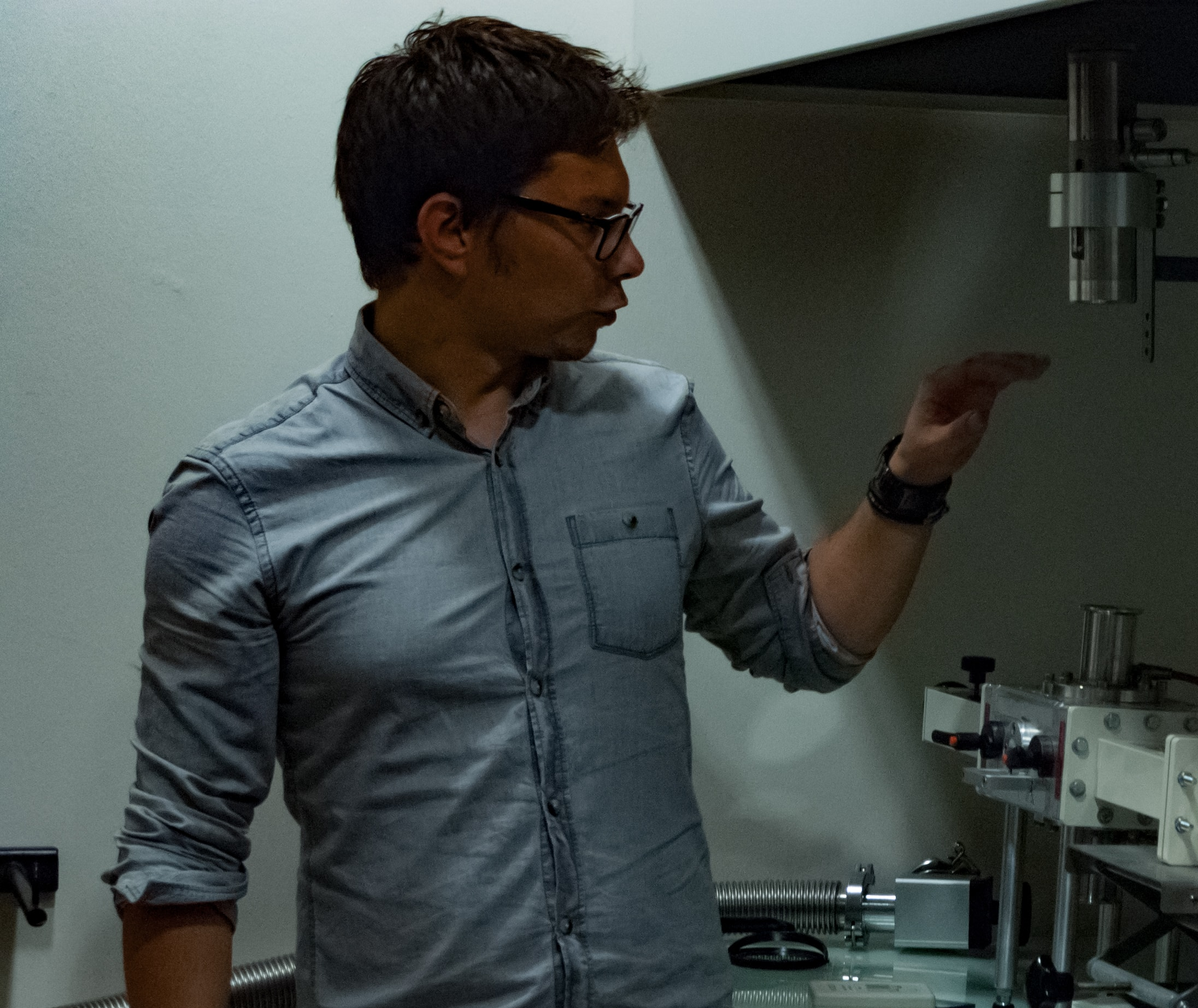
Silvio Bove (Université de Paris 1 Panthéon-Sorbonne, Sorbonne Université)
L’objectif général de sa thèse est l’étude d’équations aux dérivées partielles posées dans des domaines présentant une géométrie fortement oscillante et en présence de données peu régulières, typiquement un second membre dans l’espace L1. Cette combinaison génère des difficultés analytiques importantes, car ni la régularité classique des solutions faibles ni les outils énergétiques usuels ne sont immédiatement disponibles. L’analyse requiert alors l’utilisation de la notion de solution renormalisée, introduite par DiPerna et Lions pour les équations de transport et adaptée au cadre elliptique et parabolique par Boccardo, Gallouët, Murat, Blanchard et al. Sa thèse s’inscrit dans ce cadre fonctionnel, en le combinant avec des techniques issues de l’homogénéisation dans des milieux hétérogènes complexes.
Julien Bruchon (Laboratoire Georges Friedel, Département MPE, EMSE)
Julien is a Full Professor in computational mechanics at École des Mines de Saint-Étienne. He was the recipient of an ANR JCJC grant (2010–2013) on the simulation of the sintering process and is currently the coordinator of LINEN, an ANR PRME project on biocomposites. In a cross-disciplinary role within the “Mechanics and Direct Elaboration Processes” team, he has been working since his arrival in 2008 on the development of numerical methods within a high-performance finite element framework for the simulation of net-shape manufacturing processes. His research mainly focuses on monolithic approaches for coupling domains governed by different equations (e.g. Stokes/Darcy flows, solid/liquid behaviours), as well as on level-set techniques to capture interfaces between these domains and their associated geometrical properties (curvature, Laplace–Beltrami operator, etc.). This work is implemented in an in-house and open-source finite element library, Coeur.
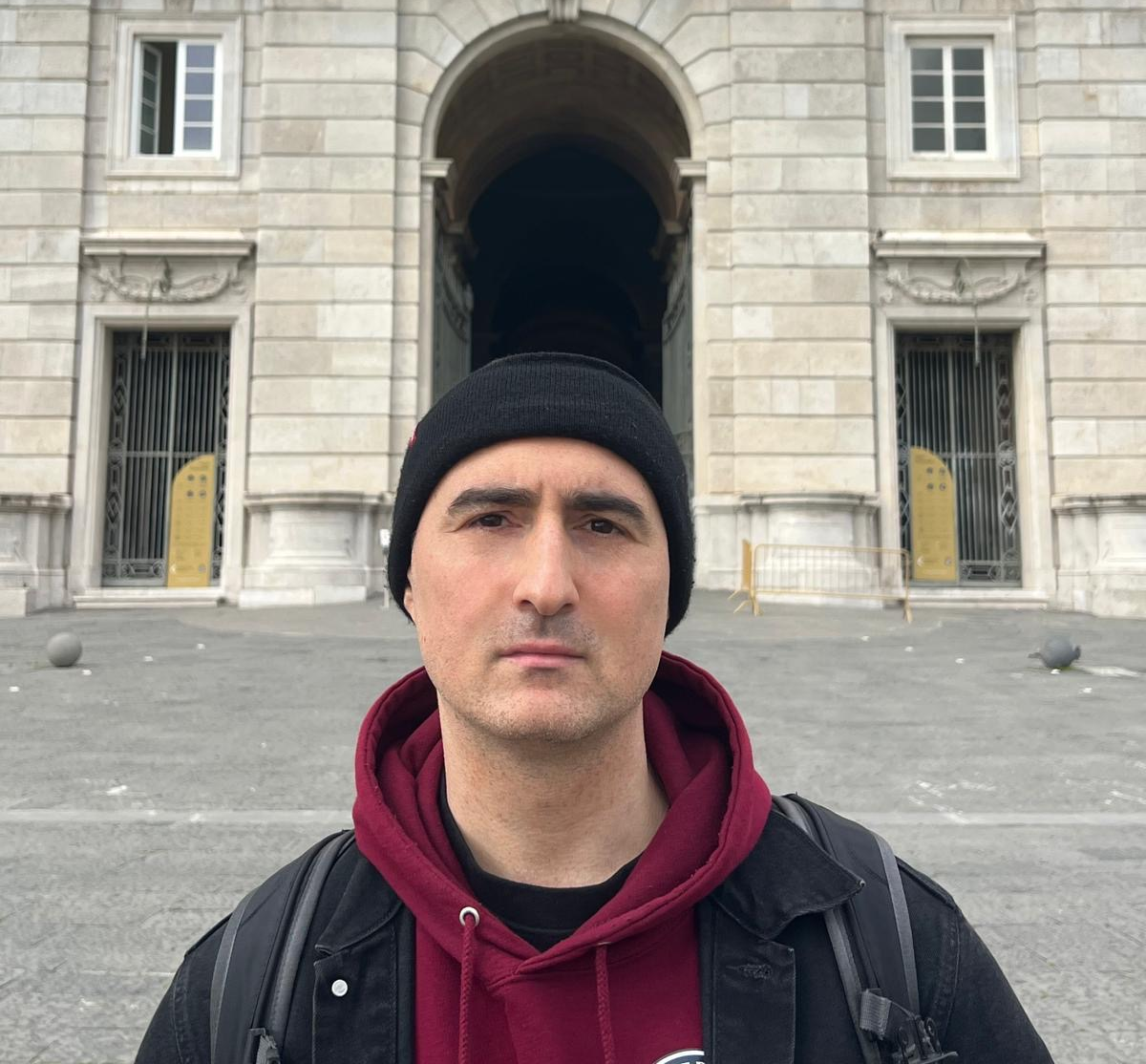
Matteo Capoferri (University of Milan & Heriot-Watt University)

Matteo Capoferri is an Associate Professor at the University of Milan (Italy) and an Associate Professor and EPSRC Fellow at Heriot-Watt University in Edinburgh (UK). He obtained his PhD from University College London in 2020, under the supervision of Prof. Dmitri Vassiliev. He then held a postdoctoral appointment in Cardiff, before taking up a permanent post in Edinburgh. His research focuses on various aspects of the analysis of PDEs, more specifically in the subject area of spectral theory. He interests span across a variety of topics, ranging from “pure” Spectral Geometry (pseudodifferential systems on manifolds) to more applied problems on propagation of waves in random composite materials and stochastic homogenisation.
Aurélie Chapron (Laboratoire de Mathématiques Raphaël Salem, Université de Rouen Normandie)
Après avoir fait ses études de Mathématiques à l’Université de Rouen, Aurélie a effectué un doctorat co-encadré avec l’Université Paris Nanterre sur les mosaïques de Poisson-Voronoï sur une variété riemannienne, dont le but était d’explorer le lien entre les propriétés de la mosaïques de Voronoï (aire moyenne, nombre moyen de sommets...) et les caractéristiques géométriques de la variété (courbures). Cette thèse, et sa recherche en général, s’inscrivent dans le domaine de la géométrie aléatoire, qui consiste en l’étude des propriétés statistiques d’objets géométriques construits à partir de points tirés « au hasard ».
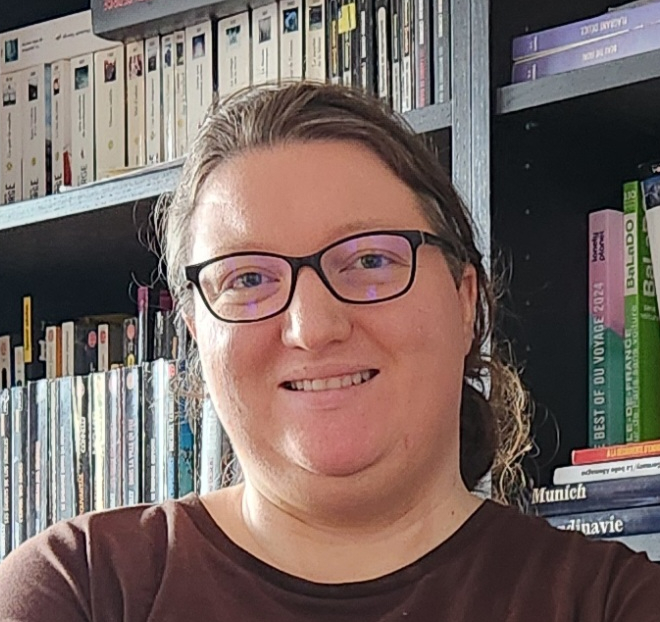
Constantin Christof (Technische Universität Darmstadt)

Constantin Christof is full professor for continuous optimization at the Technical University of Darmstadt.
He took up this position in 2025 after receiving his PhD from the Technical University of Dortmund in 2018 and holding post-doc positions at the Technical University of Munich and the University of Duisburg-Essen as well as a visiting professorship at the University of Augsburg. His research focuses on infinite-dimensional optimization and inverse problems, with a special emphasis on the optimal control of partial differential equations and variational inequalities. In these fields, he develops, for example, solution algorithms for parameter identification problems in inverse homogenization, analytical tools for the sensitivity analysis of nonsmooth systems, and error estimates for numerical approximation schemes.
Emilie Falourd (Laboratoire Georges Friedel, Centre SPIN, EMSE)
Emile est doctorante en mathématiques appliquées et traitement de l’image à Mines Saint-Étienne. Diplômée d’un master en analyse, équations aux dérivées partielles et physique mathématique de la LMU Munich, Emilie travaille sur la modélisation et la caractérisation géométrique et topologique de microstructures aléatoires, en particulier à l’aide des fonctionnelles et tenseurs de Minkowski, dans des modèles fondés sur des champs d’excursion gaussiens ou quasi-gaussiens. Ses recherches visent spécifiquement à établir des liens entre ces descripteurs, la morphologie de matériaux poreux, leur évolution dynamique et l’apparition de défauts structurels, notamment dans le contexte des piles à combustible.
Enrique Juste (INISMa-CRIBC - Belgian Ceramic Research Centre)
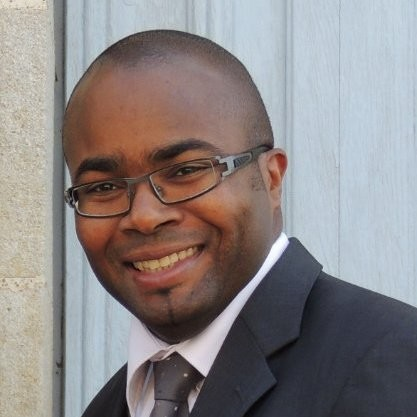
Enrique JUSTE is Program Manager of the “Manufacturing Processes” group at INISMa-CRIBC (Belgian Ceramic Research Centre) in Mons, after having worked there for nearly fourteen years as a project manager. He graduated as a ceramic engineer from ENSCI and completed a PhD in materials science and ceramic processing at the University of Limoges in 2008, within the framework of a joint supervision program with Air Liquide at the IRCER laboratory. He has been working for nearly fifteen years in the field of advanced ceramic shaping. Over the last ten years, his activities have focused on innovative processing routes such as Selective Laser Sintering/Melting, binder jetting, and hybrid manufacturing processes for technical ceramics, combining additive and subtractive approaches. He is also involved in collaborative projects, as well as in activities related to the qualification of material-process pairs in the ceramics and glass sectors.
Charles Manière (CRISMAT, ENSICAEN, CNRS, Université Caen Normandie)
Charles Manière completed his PhD at the University of Toulouse specializing in the modeling of Spark Plasma Sintering. From 2016 to 2018 he completed a 2 year PostDoc at San Diego State University. During this PostDoc, Charles developed advanced multiphysics models for microwaves sintering, flash sintering, and additive manufacturing. In 2018, he succeeded in the selective entry of the CNRS and started his current position as a CNRS researcher at the CRISMAT laboratory (Normandie Université) where he is developing his activity in sintering and 3D printing. In 2018, he obtained the Habilitation à Diriger des Recherches (HDR) and was awarded the CNRS Bronze Medal in November 2025. He is the author of 91 scientific publications (1,863 citations) with an h-index of 24. His research interests focus greatly on the muliphysics simulation of sintering but are also strongly interconnected with ceramic 3D printing techniques such as direct ink writing, stereolithography, field assisted sintering and formulation, as well as various simulation developments like the assessment of physical parameters and machine learning. His research interests are also particularly focused on bridging 3D printing and sintering, in particular with ultra-fast sintering and processing, lattice structures, debinding issues, deformations, and sintering mechanisms.
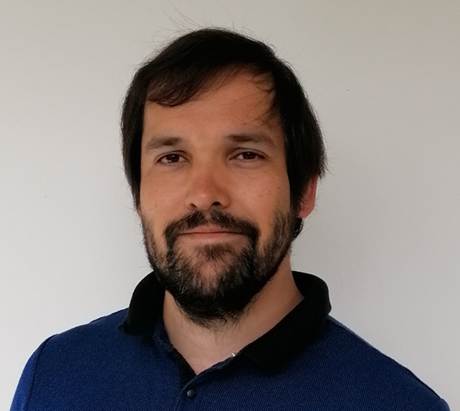
Clémence Petit (Laboratoire Georges Friedel, Département MPE, EMSE)
Clémence PETIT est Maître Assistante au Laboratoire Georges Friedel (CNRS UMR 5307) à l’Ecole Nationale Supérieure des Mines de Saint-Etienne. Après avoir reçu son diplôme d’ingénieure de l’INSA Lyon (Science et Génie des Matériaux) en 2012, elle a obtenu son doctorat en science des matériaux au laboratoire MATEIS en 2015 (caractérisation des propriétés mécaniques d’échantillons de phosphate de calcium poreux par suivi tomographique). Entre 2016 et 2018, elle a été post-doctorante au laboratoire LINCE (Politecnico Torino) où elle a travaillé sur l’élaboration de phosphate de calcium à gradient de porosité pour des applications osseuses. Elle a rejoint le LGF en 2018. Ses travaux de recherche portent sur les procédés de fabrication de céramiques techniques et plus particulièrement sur l’étape de frittage (frittage conventionnel en four résistif et frittage par micro-ondes). Elle est co-autrice de 20 articles dans des revues à comité de lecture et de 37 contributions orales dans des conférences nationales et internationales (dont 18 en tant que présentatrice).
Lucas Reding (Laboratoire CERAMATHS, Université Polytechnique Hauts-de-France)
Lucas studied Mathematics at the University of Rouen from 2012 to 2017 where he obtained his master's degree in fundamental and applied mathematics. He then completed his Ph.D in 2020 within the same univesity studying limit theorems for fields of dependent random variables. After a year as postdoctoral researcher at École des Mines de Saint-Étienne (EMSE), Lucas obtained an assoicate professor position at Université Polytechnique Hauts-de-France. His research areas cover limit theorems for random fields under different dependency conditions, parametric and non parametric estimation as well as stochastic geometry. Since his postdoctorate position at EMSE, Lucas has had a keen interest in studying the microstructure of ceramic materials.
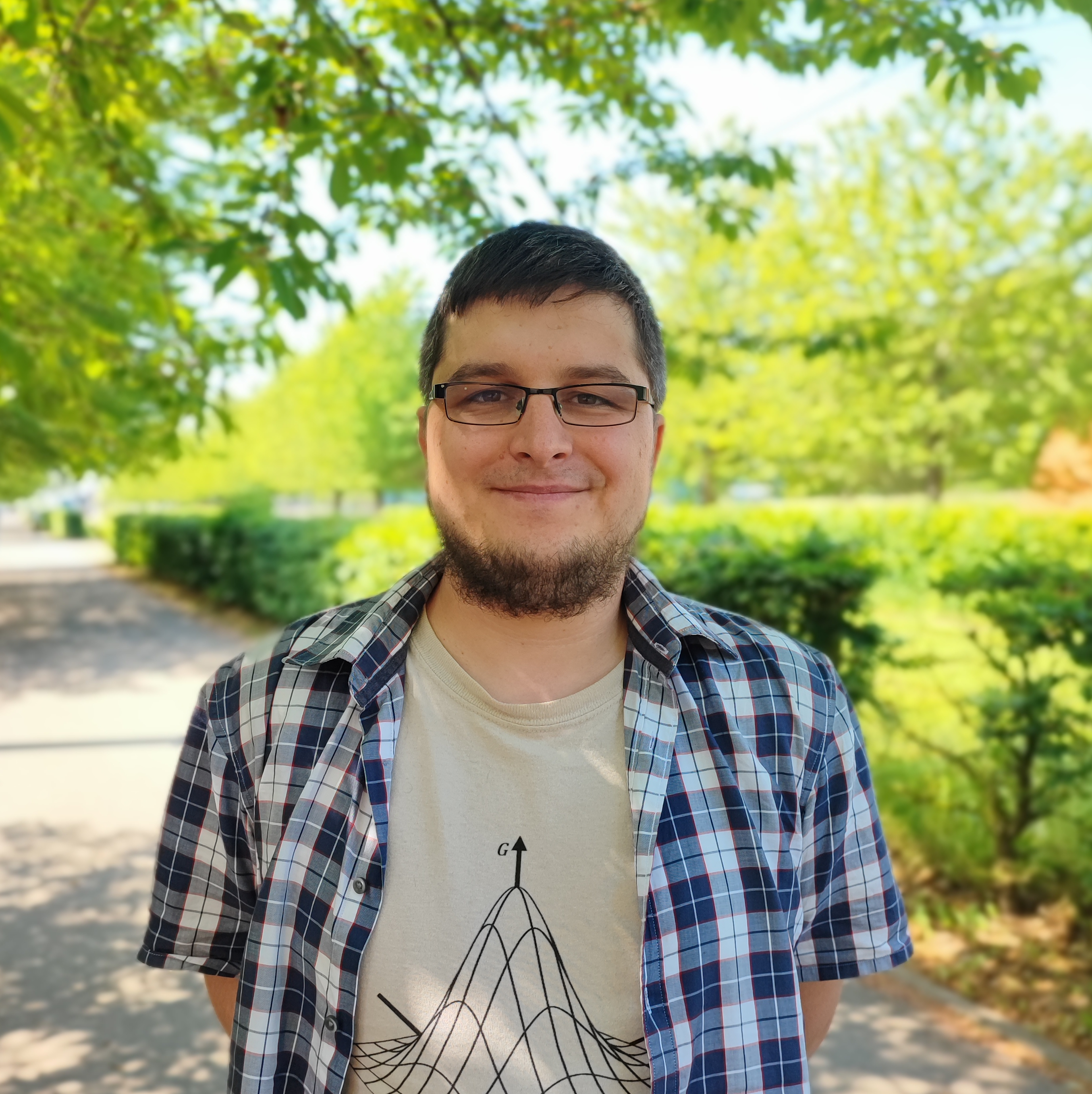
Matthias Täufer (Laboratoire CERAMATHS, Université Polytechnique Hauts-de-France)

Matthias Täufer is Chaire de Professeur Junior (assistant professor) at Université Polytechnique Hauts-de-France. He obtained his PhD at TU Dortmund in 2018 and has since been postdoctoral researcher at Queen Mary Unversity of London and FernUniversität in Hagen. In his research, he is interested in various aspects of analysis, spectral theory, partial differential equations (in particular heat equations) and mathematical physics. At CERAMATHS, he conducts research on the mathematical aspects of materials science, particularly to understand the properties of porous materials, especially in the context of processes such as 3D printing.
Anthony Thuault (Laboratoire CERAMATHS, Université Polytechnique Hauts-de-France)
Anthony Thuault is an associate professor at Université Polytechnique Hauts-de-France since 2014. He obtained a PhD at Université de Caen Basse-Normandie in 2011 with his work on the multiscale approach of the structure and the mechanical behaviour of flax fibre. He then was a postdoctoral researcher, working on the microwave sintering of ceramic materials. His current research focuses on unconventional shaping and sintering of ceramic materials, as well as their physical, microstructural, and mechanical characterization.